Best Filament for Outdoor Use: What Survives Sun & Rain
PLA cracks and fades in months. Here's which filament actually holds up outdoors — and the one question that picks it for you.
Try these in order (cheapest first)
- Use ASA for anything in direct sun long-term — it's purpose-built for outdoor UV — $25–$40/kg
- Use PETG if you can't run an enclosure — best no-fuss outdoor option — $20–$35/kg
- Use polycarbonate (PC) when the part is structural AND outdoors — $35–$60/kg
- Don't use PLA outdoors — it embrittles and fades in months — —
Step by step
Step 1: ASA — the filament engineered for the outdoors
ASA (acrylonitrile styrene acrylate) is essentially ABS with the UV-vulnerable component swapped for a UV-stable acrylic. It was created for exactly this job: outdoor automotive trim, signage, and weather-exposed parts. It resists yellowing and embrittlement under direct sun for years, tolerates heat up to roughly 95–100°C under load, and shrugs off rain. The catch is that ASA prints like ABS — it warps badly without a heated enclosure, and it gives off styrene fumes you shouldn't breathe in an unventilated room. If your part lives in direct sun and has to last, ASA is the right answer, provided you have an enclosure to print it.
Step 2: PETG — the practical no-enclosure pick
If you can't or won't run an enclosure, PETG is the best outdoor filament you can print on an open machine. Its UV resistance is moderate — meaningfully better than PLA, not as durable as ASA — and it handles rain and temperature swings well thanks to good chemical and moisture resistance. Heat deflection sits around 70–80°C under load, fine for most outdoor uses but not for a black part baking on a dashboard. Expect a PETG part in full sun to hold up for one to three years before it starts to dull and lose toughness. For planters, garden clips, mounts under an eave, or anything in partial shade, PETG is the pragmatic choice.
Step 3: Polycarbonate (PC) — for structural parts that live outside
Reach for polycarbonate when the part is load-bearing or impact-exposed and outdoors — brackets, housings, mechanical components in the sun. PC is extremely tough and tolerates heat far beyond ASA (heat deflection commonly 110–140°C depending on grade). Two caveats: base PC is not automatically UV-stable, so buy a grade explicitly labeled UV-resistant or weatherable; and PC is demanding to print — high nozzle temps (around 270–310°C), an enclosure, and dry filament are non-negotiable. It's the strongest option here, but it's overkill for non-structural parts that PETG or ASA already cover.
Step 4: Why PLA fails outdoors — and the 'mine lasted a year' myth
PLA is not UV-stable and absorbs moisture readily. Outdoors it does two things: it goes brittle as UV breaks down the polymer chains, and it slowly hydrolyzes in humidity and heat. A PLA part in direct sun typically becomes noticeably brittle and faded within 6–18 months — faster in hot, sunny climates, slower in shade or mild weather. That's the source of the "mine lasted a year, PLA is fine" comments: someone's part survived because it sat in shade in a temperate climate. For a hose clip in the shade, sure. For anything in direct sun that matters, it's a false economy — print it once in ASA instead of three times in PLA.
Step 5: Make any outdoor print last longer
Material choice does most of the work, but a few habits extend any outdoor part's life. Print in a darker or UV-pigmented color — black and dark grey resist UV damage better than natural or white. Apply a clear coat formulated with UV inhibitors (automotive clear coat works well) to add a sacrificial protective layer, especially over PETG or PLA. Design with thicker walls and more perimeters so surface embrittlement doesn't compromise the whole part. And keep parts off direct ground contact where standing water accelerates hydrolysis. None of these turn PLA into ASA, but they buy real time.
Frequently asked questions
- Is PETG UV resistant?
- Moderately. PETG resists UV far better than PLA but not as well as ASA, which was engineered for it. A PETG part in full sun typically holds up for one to three years before dulling and losing toughness. For partial shade or short-term outdoor use, PETG is fine; for years of direct sun, choose ASA.
- How long will an outdoor PLA print last?
- In direct sun, usually 6–18 months before it goes brittle and fades — faster in hot, sunny climates, slower in shade or mild weather. PLA isn't UV-stable and absorbs moisture, so it degrades two ways outdoors. For anything that matters in the sun, print it in ASA or PETG instead.
- Does ASA need an enclosure?
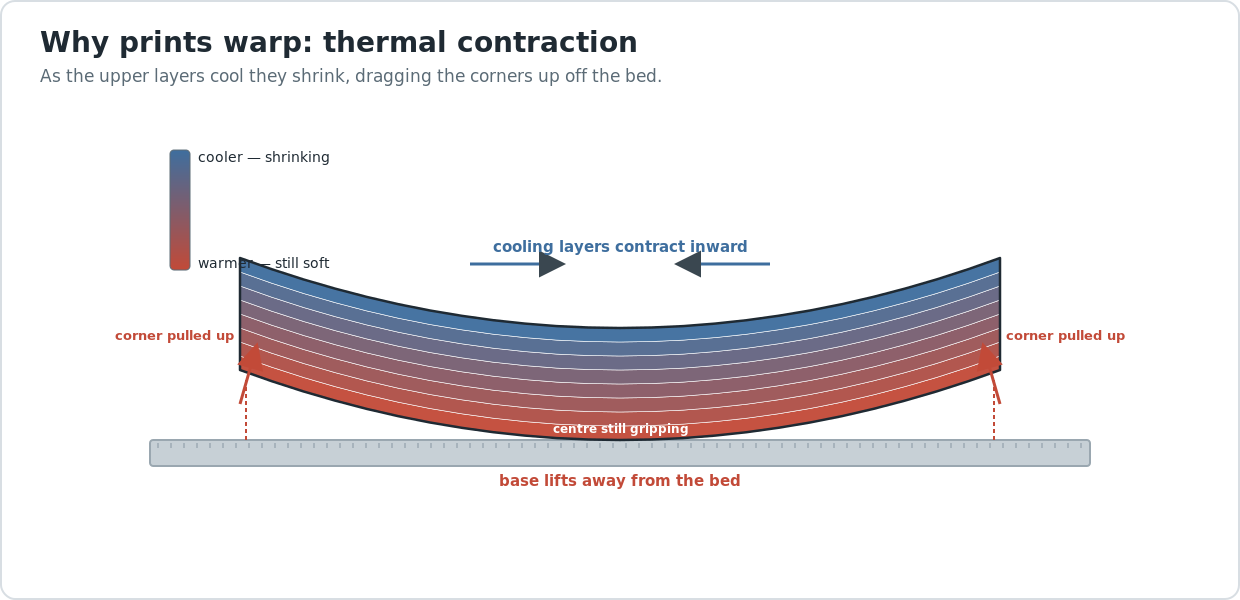
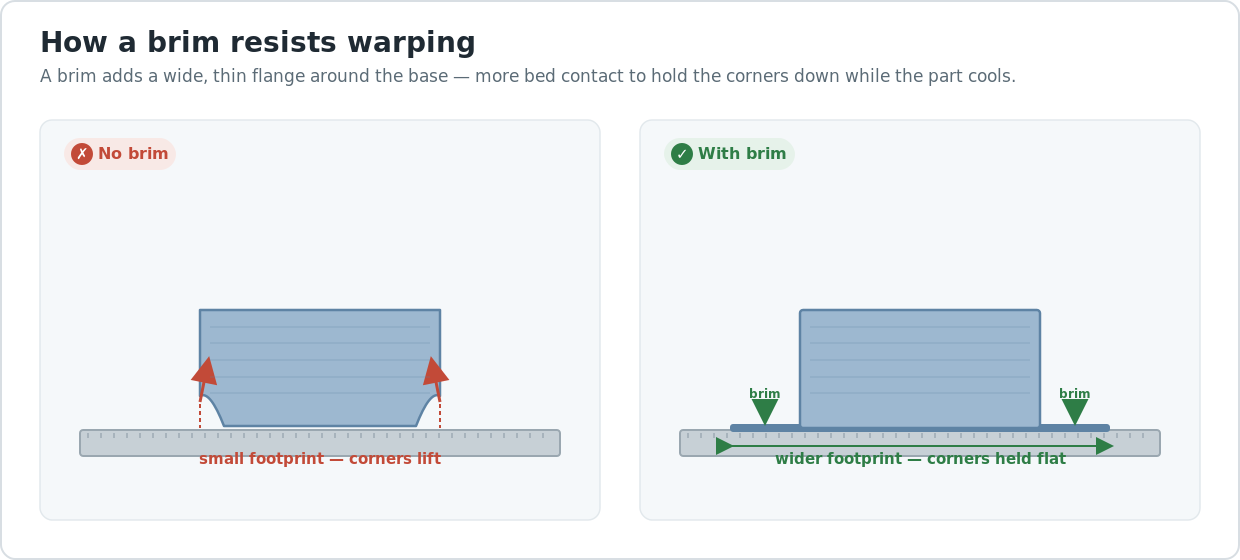
- Effectively yes. ASA warps badly on an open printer, much like ABS, because it contracts hard as it cools. Small parts under about 50 mm can sometimes print without one using a brim and a draft-free room, but for reliable ASA prints an enclosure isn't optional — it's what makes the material printable.
- What about ABS for outdoor use?
- ABS works short-term but yellows and embrittles under UV faster than ASA — ASA was literally invented to fix that weakness. If you already have ABS and the part isn't in permanent direct sun, it'll do. For anything meant to last outdoors, ASA is the better choice for nearly identical printing behavior.
- Can I make PLA UV resistant with a coating?
- Partly. A UV-inhibiting clear coat (like automotive clear) adds a sacrificial protective layer and slows degradation, especially in a darker color. It extends life but doesn't make PLA weatherproof — the underlying plastic still embrittles over time. For parts that must survive years outdoors, change the material rather than relying on a coating.
The one question that picks your filament
Before comparing spec sheets, answer this: will the part sit in direct sun for more than a few months, and can you print with an enclosure?
- Direct sun, long-term, enclosure available → ASA. It’s what the material was built for.
- Outdoors but you can’t run an enclosure → PETG. The best open-printer option.
- Structural or impact part, outdoors → polycarbonate (UV-rated grade).
- Shade, short-term, or you’re fine reprinting → PLA is acceptable, with eyes open.
Everything below is for the cases where that shortcut doesn’t fully decide it.
Quick comparison
| PLA | PETG | ASA | PC (UV-rated) | |
|---|---|---|---|---|
| UV resistance | Poor | Moderate | Excellent | Good (UV grade only) |
| Heat resistance | ~50–60°C | ~70–80°C | ~95–100°C | ~110–140°C |
| Enclosure required? | No | No | Yes | Yes |
| Ease of printing | Easiest | Moderate | Hard | Hardest |
| Outdoor lifespan (direct sun) | 6–18 months | 1–3 years | Years | Years |
| Typical price/kg | $18–$30 | $20–$35 | $25–$40 | $35–$60 |
Heat figures are approximate heat deflection temperatures under light load; UV lifespan depends heavily on climate, color, and sun exposure.
How to think about it
Most “best outdoor filament” decisions come down to a trade between how well it survives the sun and how hard it is to print. ASA and PC win on durability but demand an enclosure and dialed-in settings — see our guide on why prints warp and how to stop it, because both materials warp aggressively. PETG is the sweet spot for most people: good-enough UV resistance with none of the enclosure hassle.
If you’re still deciding between materials in general — not just for outdoor use — start with our PLA vs PETG vs ABS filament breakdown. And if your outdoor prints are failing at the first layer before you even get to weatherproofing, our first-layer adhesion troubleshooting guide covers the fixes. For picking a printer that handles enclosed, high-temp materials like ASA, see the honest desktop 3D printer buyer’s guide.
Last updated
Reviewed 2026-06-24. UV and heat figures are material-category averages; outdoor lifespan varies widely by climate, sun exposure, and color. Always check your specific filament brand’s technical data sheet.